

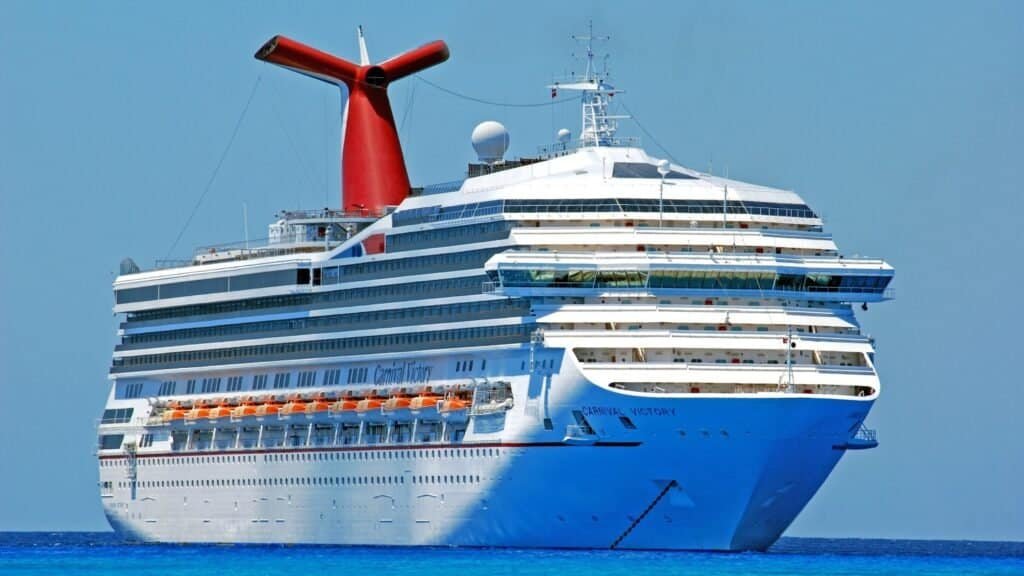
Are ship names italicised? What about ship prefixes like HMS or USS? Do we include ‘the’ with ship names? And what about possessives and plural ship names? Read on for answers!
When writing about ships for fiction and nonfiction, you may be confused about whether to use italics or roman font, where the italics start and end, how to format plural or possessive forms of ship names, and more.
In this blog post, I’ll be covering everything you could ever wish to know about how to write ship and submarine names (and other modes of transport). Please note that this guide is largely for writing ship names in fiction and nonfiction. Always refer to the style guide you’re following for the final word.
If you have a question not answered in this post, let me know in the comments!
Italics and initial capitals for ship names
The basic rule of thumb in most style guides (e.g. CMOS and Oxford style – New Hart’s Rules) is to use initial capitals and italics for ship names. Keep any prefix, such as HMS or USS, in roman (non-italicised) font. For example:
- I served in USS San Antonio for two years. [NB. one serves ‘in’ rather than ‘on’ a ship, at least according to Oxford style. However, the US Navy Style Guide stipulates that one does NOT ‘serve in’ a ship, but ‘is stationed on’, ‘serves with’ or ‘is assigned to’]
- HMS Victory is in a dry dock in Plymouth, UK.
- First-class facilities on Titanic included a saltwater swimming pool.
The exception to this rule is if the prefix is part of a title of a creative work (note the punctuation in the ship prefixes in the following titles, as was common at the time the works were created):
- Have you seen the light opera H.M.S. Pinafore?
- H.M.S. Defiant is a 1962 film directed by Lewis Gilbert.
When using a ship name in a possessive or plural construction, only italicise the ship’s name, not the ‘s or s:
- Bismarck’s crew numbered 103 officers and 1,962 enlisted men.
- Mauritania’s sister ship, Lusitania, was sunk by a German submarine in 1915.
- It’s the size of two Titanics!
Ship name as part of a larger body
What about if a ship name forms part of a group or body? For example, should the USS George Washington Strike Group be formatted as follows: USS George Washington Strike Group?
Apparently not. Although this particular instance is not covered in style guides like Chicago, the FAQs on the CMOS site suggest this scenario is similar to using all roman text for periodical titles when they’re part of the name of an organization, building or award (for example the Los Angeles Times Book Prize).
See CMOS FAQs for more information on formatting a ship name when part of a larger body
Italicising a ship name in dialogue
It’s common practice in most style guides to use italics for ship names, even in dialogue.
It may look as if the character is emphasising the ship name, but this is convention, so that’s a risk we’ll have to put up with.
Italicising a ship name in a book or movie title
When referring to a book or movie title that contains a ship name, convention is to use reverse italics for the ship name, so italics for the rest of the title and roman for the ship name. For example, The Voyage of the Dawn Treader. See Rebekah Slomin’s excellent article about this for more details.
However, if the movie title is only the name of the ship, with no other words, then retain the italics. Now I’m struggling to think of such a movie title. Hmm, let me see … ah yes! Titanic. See CMOS FAQs for more information on italicising a ship name in a book or movie title.
Exceptions to the italics rule for ship names
The Associated Press Stylebook (AP style), true to its minimalist tendencies, doesn’t italicise the names of boats or ships.
Also, the US Navy Style Guide [PDF, 247 KB) does not italicise ship names.
If a list consists entirely of ship names, a style guide may stipulate that roman font is to be used rather than italics. For example, the US Government Printing Style Manual, states: “The names of aircraft, vessels, and manned spacecraft are italicized unless otherwise indicated. In lists set in columns and in stubs and reading columns of tables consisting entirely of such names, they will be set in roman.”
Why italics for ship names?
Is it just style guides being awkward? Actually, no. Apart from the fact that the ship name falls somewhere between a book title and a proper noun, the more practical reason is that many vessels are named after people, animals or places.
The italics make it clear that a ship, rather then a person, for example, is being referred to:
- The tourists clambered all over the iconic Queen Mary. (“I bet they had a fine old time on the historic ship.”)
- The tourists clambered all over the iconic Queen Mary. (“No respect for royalty these days!”)
Ship name prefixes
A ship’s prefix refers to the initials that appear before some ship names, for example, HMS (His/Her Majesty’s Ship) and USS (United States Ship). As mentioned above, these are not italicised:
- HMS Icarus
- USS Missouri
Detailed list of ship prefixes on Wikipedia
Best practice is to use the ship’s prefix the first time you mention the vessel, then use just the ship’s name without the prefix for any subsequent mentions.
The term ‘His Majesty’s Ship’ was first used around 1660 and wasn’t routinely abbreviated to ‘HMS’ until around 1780. Therefore, if you’re writing about a ship before this date, don’t retrospectively add the prefix. Predating like this is a no-no!
‘The’ or no ‘the’ for ship names?
Here’s where things can get a bit murky!
Let’s start with a fact. It’s not correct to use ‘the’ before a ship name with the prefix HMS, because you would never say ‘the His/Her Majesty’s Ship Victory’. Always exclude ‘the’ in this case. For example:
- Did you know HMS Belfast had its own bakery, chapel and radio station?
- Lord Nelson’s flagship was HMS Victory.
When using the ship name without the prefix, and for most prefixes other than HMS, such as USS, it is acceptable to include ‘the’ (do the grammar check, as for HMS above). However, many purists frown on using ‘the’ in front of any ship name, and the US Navy Style Guide agrees with this approach.
New Hart’s Rules (Oxford style) states “the definite article is omitted when using the ship’s prefix” and gives non-prefix examples using ‘the’, such as ‘the Cutty Sark’.
I’ve deduced from fairly extensive online research that ‘the’ tends to be more acceptable before a ship name if the vessel is very well known. Hence, we don’t look twice at ‘the Titantic’ or ‘the Victory’, even though ‘Titanic’ and ‘Victory’ is perhaps the more traditionally correct way of presenting these.
Here are some examples:
- In 1620, Oceanus Hopkins was born on (the) Mayflower, en route to the New World. [‘the’ is optional in many style guides]
- I recently learnt (the) Fram was designed to survive extreme ice pressure. [‘the’ is optional in many style guides]
If you’re including ship names in dialogue, your decision of whether to include ‘the’ will depend on the character. People in real life use ‘the’ before ship names all the time, so if it fits for your character to include ‘the’, then do so!
Ship names in possessive constructions
If the ship’s name is the object of a possessive construction, never include ‘the’. For example: Admiral Nelson’s Victory was a fine ship.
Use ‘the’ before a ship name to remove ambiguity
If using ‘the’ removes ambiguity, then you may wish to include it. This will usually be the case for ships named after people, places or objects:
- The Edinburgh was attacked.
- The Queen Elizabeth II launched in the 1960s.
‘The’ as part of a ship’s name
If ‘the’ is part of the ship’s official name, include it as you would any other word in the vessel’s name, i.e. use a capital initial and italics. For example: ‘My boat, The Happy Lark, has sprung a leak.’
Hopefully it goes without saying that you would never include the article ‘the’ before a ship name that already contains The.
This rule also applies to names of ships in languages other than English. Don’t write ‘The L’Orient’, for example, just L’Orient.
Plural of ship names
Occasionally, you may find yourself having to refer to a ship name in the plural. If so, most style guides would advise to keep the ship’s name in italics but not to extend the italics to the final ‘s’.
For example:
- The new cruise liner is the size of several Titanics. (This could also be rephrased to avoid the slightly awkward formatting, e.g. The new cruise liner is several times the size of Titanic.)
- There have been nine HMS Dreadnoughts, and the tenth is under construction.
However, you could argue that in some sentences, such as the Titanic example above, the pluralised ship name represents more of an idea than the actual ship. If this comes across strongly, I’d argue that italics are optional. If you’re following a particular style guide, always defer to that.
What about other vessels and vehicles?
Names of specific aircraft, trains and spacecraft tend to be italicised (again, depending on the style guide), for example, Flying Scotsman and Spirit of St. Louis. However, if you’ve named your car Bessie or Rocket, no italics are necessary.
See CMOS FAQs for more information on formatting names of houses and cars
Names of spaceships and satellites
Specific names of spacecraft follow the same formatting conventions as ships, i.e. italics, but generic terms and space-program names are written in roman (normal font).
Use italicised spacecraft names in the same way you would ship names, so ‘the’ is optional.
Here are some examples:
- Voyager 1 is almost 16 billion miles from Earth.
- Columbia was the command module for the Apollo 11 mission, and Eagle was the lunar module.
- Mars Global Surveyor succumbed to a battery failure in 2006. [no italics as this name is based on a generic description]
- Sputnik was the first artificial satellite launched into Earth’s orbit.
- The International Space Station orbits the planet every ninety minutes.
- NASA’s Artemis II mission launched Orion on 1 April 2026.
You may notice that spacecraft aren’t always italicised in news articles or on NASA’s website. This is likely because they use AP style. However, if you’re referring to spacecraft in your book and are following Chicago Manual of Style, Oxford style, or another popular style guide, format the names in italics.
Are ships a ‘she’ or an ‘it?
Traditionally, ships have been referred to as ‘she’, possibly due to the vessel keeping sailors safe at sea, similar to a mother figure or goddess. However, for some time, this has no longer been common practice in most style guides and ‘it’ is mostly preferred. Indeed, the AP style guide uses ‘it’, guidance that dates back to at least 1977, and the shipping industry newspaper, Lloyd’s Register of Shipping, calls ships ‘it’.
Because someone always has to be different, Ernst Lindemann, captain of the German battleship Bismarck, referred to his ship as ‘he’ and demanded his crew did the same (apparently due to its power). Of course, this is not prescriptive for us today, so feel free to refer to Bismarck as ‘it’.
Mary Celeste or Marie Celeste?
It’s fairly common to see the spelling Marie Celeste, but this is incorrect. The accurate spelling of the merchant ship found adrift and deserted in 1872 is Mary Celeste.
Due to a spelling error on the part of Arthur Conan Doyle (#shouldhavehiredaproofreader) in his 1884 short story based on the nautical mystery, the spelling Marie Celeste is often (erroneously) thought to be correct.
More resources
Naming conventions (ships) on Wikipedia – comprehensive article about naming ships, including hull numbers and distinguishing between ships with the same name
Detailed list of ship prefixes on Wikipedia – all the ship prefixes you’ve ever needed
If you need support in formatting ship names (or anything else!) in your book, find out how I can help.
Thank you to my editor buddies for answering my question on the CIEP forum that lit the spark for this blog post. Some of your responses have informed parts of the article.







Sara McBride
What a useful post! I did not know that the possessive ‘s’ on a ship was no italicized. I’ve been doing that wrong for years! Thank you for this and so many other details, like the HMS abbreviation before and after 1780.
Debbie Emmitt
Hi Sara! So glad you found the post useful. It all started due to a query I had regarding the plural form of ship names (an edge case, for sure!) and whether the final s is italicised. From there, the article snowballed!